
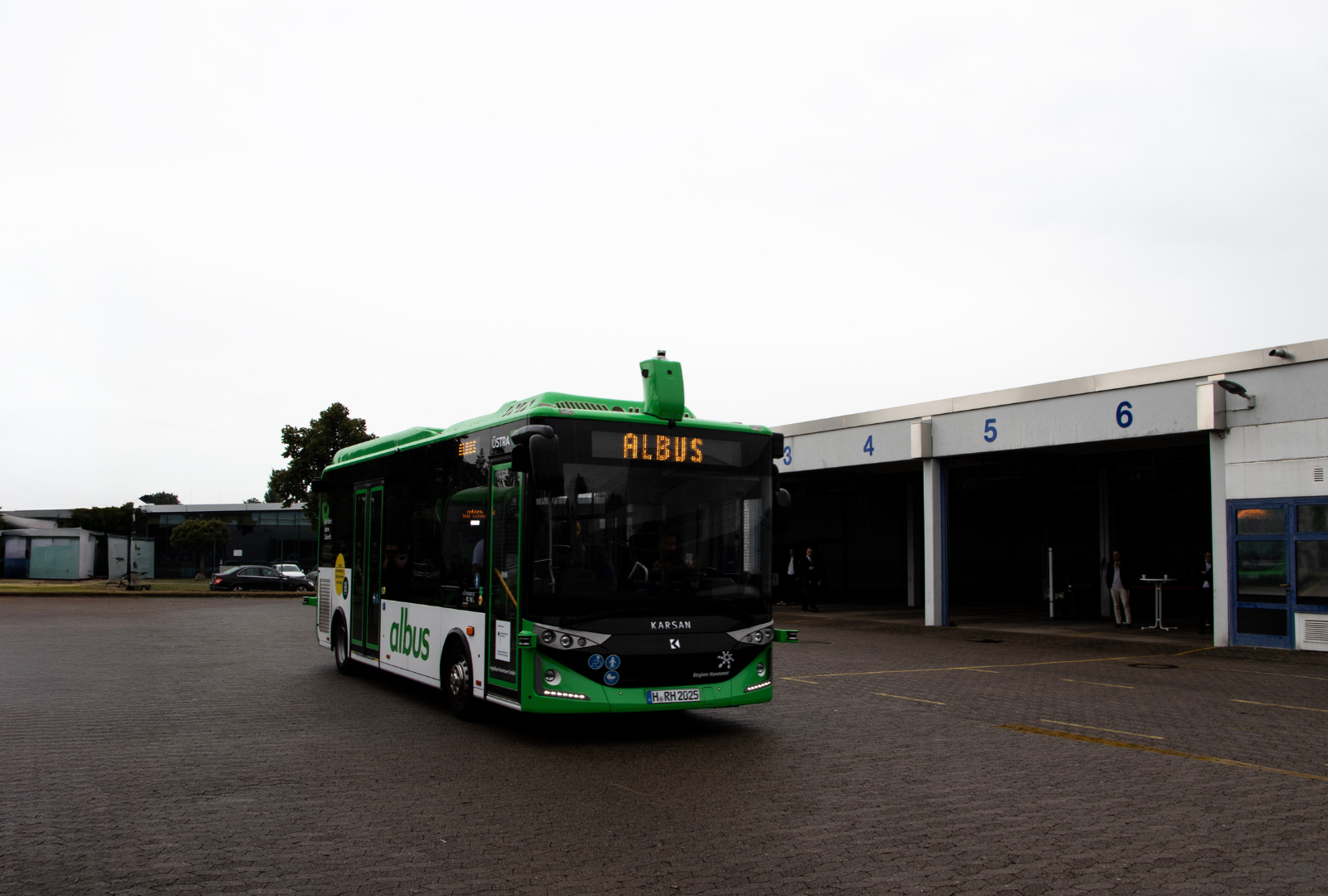
Karsan Autonomous e-ATAK, automated by ADASTEC, to Begin Operations in Germany
Hannover, Germany – August 29, 2025 – ADASTEC, a global leader in SAE Level-4 automated driving software for full-size buses, is proud to announce the start of public trial operations for the Karsan Autonomous e-ATAK, automated by ADASTEC, in Hannover Region’s pioneering Project albus. This initiative, supported by the Federal Ministry of Transport, marks the first deployment of a full-size automated bus in Germany, bringing a new chapter of smart and inclusive mobility to the streets of Burgdorf.
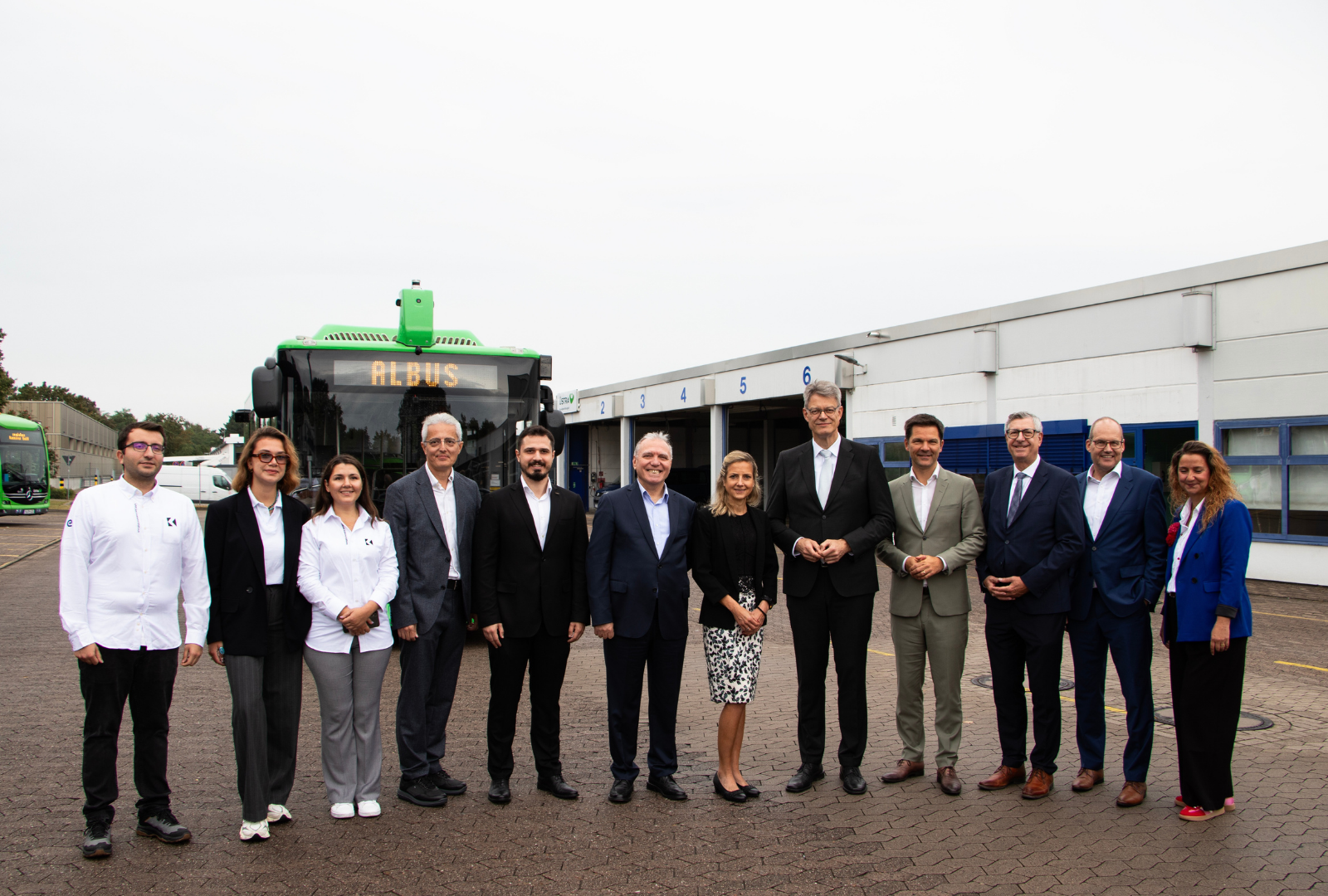
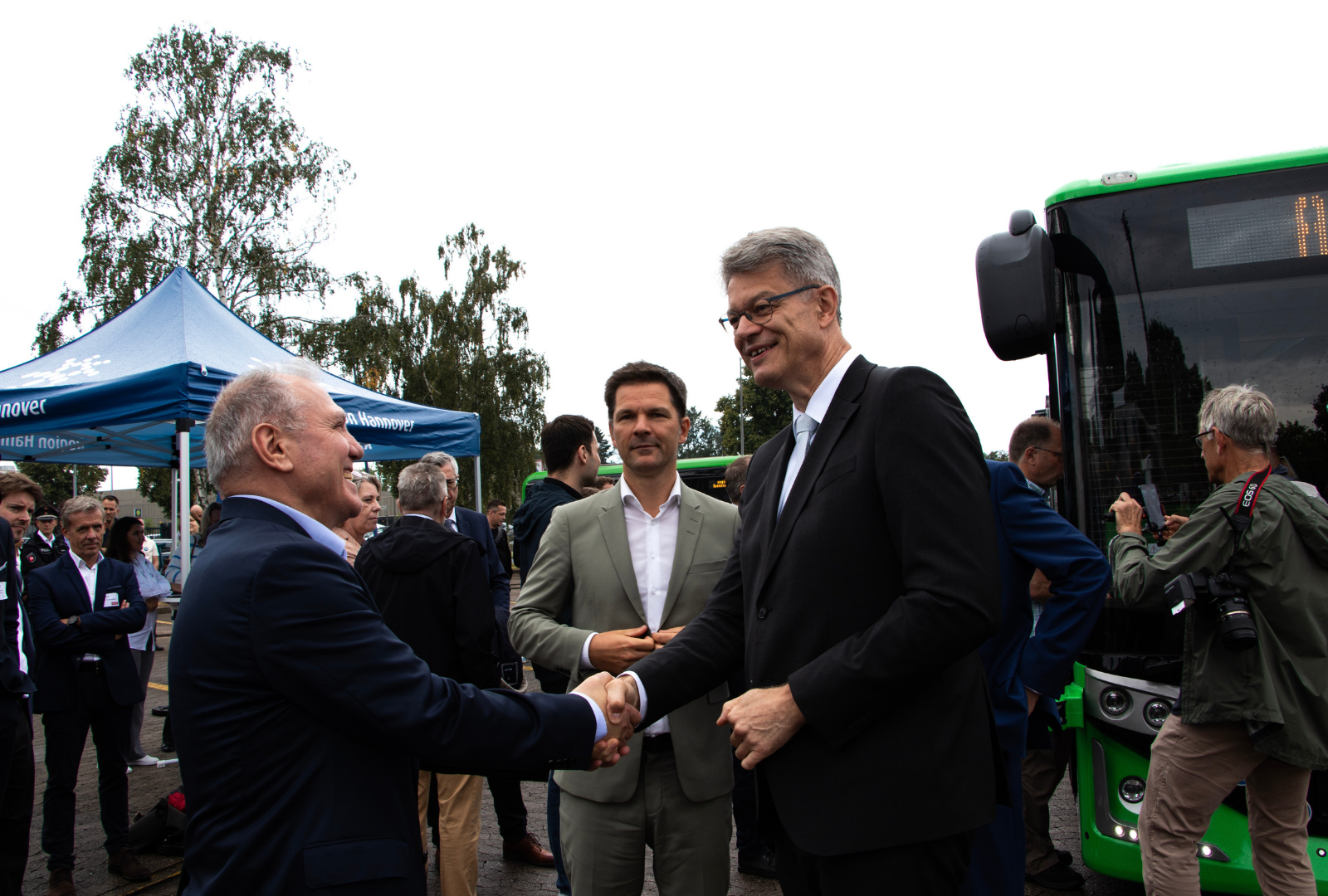
On Friday, Federal Transport Minister Patrick Schnieder joined Steffen Krach, President of the Hannover Region, Ulf-Birger Franz, Head of Transport for the Hannover Region, ÜSTRA board members Elke van Zadel and Denise Hain, and Armin Pollehn, Mayor of Burgdorf, for the symbolic first ride, underscoring the national and regional importance of this milestone.
Public Road Operation Starts in Project albus
The Karsan Autonomous e-ATAK, automated by ADASTEC, is equipped with ADASTEC’s flowride.ai SAE Level-4 automated driving software platform and advanced sensor suite. Designed for public transit, it is now entering service on open public roads in Hannover Region as part of Project albus.
Dr. Ali Peker, CEO of ADASTEC: “With years of successful deployments across Europe and the United States, we are proud to now begin public road operations in Germany. The start in Burgdorf, backed by KBA approval, is a decisive step for bringing automated driving into daily life here and reflects our commitment to building safer, cleaner, and more inclusive mobility.”
Operating along a six-kilometer route through Burgdorf, the bus serves 11 stops, crosses 10 traffic-light intersections, and navigates urban challenges including roundabouts, parallel parking, and pedestrian crossings. This marks the beginning of an initial test phase, with services starting between Burgdorf central bus station and the Schwarzen-Herzog roundabout via Gartenstraße, Vordem Celler Tor, and Kleiner Brückendamm. A second phase will extend the line to Burgdorf’s southern district via Geibelstraße, Niedersachsenring, BerlinerRing, Immenser Landstraße, and Immenser Straße.
Karsan CEO Okan Baş said that Karsan continues to equip the world with new technologies, adding, "With Karsan Autonomous e-ATAK, we are not only achieving firsts; we are also steering the mobility transformation that is shaping the future of Europe. With the albus project launched in Burgdorf, we are pioneering autonomous bus operations on public roads in Germany for the first time. Following the Netherlands and Switzerland, this step, which is transforming public transportation in Germany, proves that autonomous technology is no longer a solution for the future, but for today."
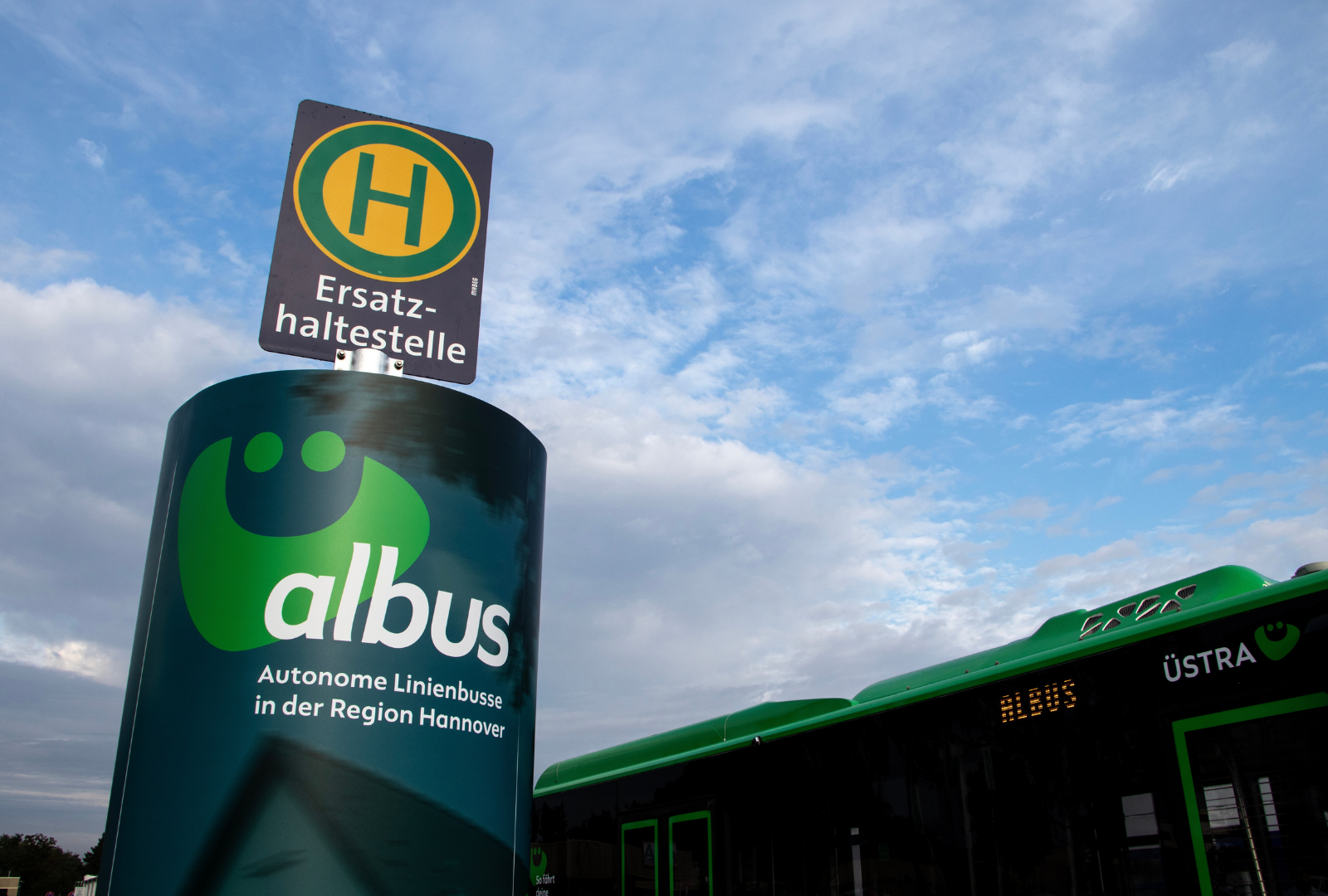
The albus time table will be available weekly at uestra.de/albus, complementing existing service on Line 906. The plan is to operate one service per hour. From mid-September, all adults will be able to ride free of charge after a one-time online registration, receiving a personalized QR code that acts as their ticket.
Elkevan Zadel, CEO of ÜSTRA: "After sprinti, we are once again implementing a nationally unique innovation project with albus. We combine international experience with local strength – and always with trained driving personnel on board."
Inclusive, Accessible, and Scientifically Monitored
The vision behind the project extends beyond automated driving, focusing on inclusive public transportation solutions with accessibility at their core. As part of albus, the service is designed to ensure that citizens can trust the technology while experiencing it first-hand. Passenger feedback will be collected via online surveys, with results helping to evaluate accessibility, comfort, and social acceptance.
The project is scientifically monitored by the Technische Universität Braunschweig, providing critical insights that will shape future deployment models across Germany and beyond.
Ulf-BirgerFranz, Head of Transport for the Hannover Region: "Theories and pilot projects in the lab are not enough. With albus, we are testing for the first time in regular service how reliably automated buses work– safely, transparently, and together with the citizens."
A Shared Effort for Smarter Cities
Project albus is supported by key regional partners including Region Hannover, ÜSTRA/Regiobus, SLB (Steuern Lenken Bauen), and the Technische Universität Braunschweig. The initiative is funded by the Federal Ministry of Transport (BMV), based on a decision of the German Bundestag.
Steffen Krach, President of the Hannover Region: "I am delighted that we in the Hannover region are once again leading the way in Germany. With albus, we are bringing the mobility of the future to life. We have proven that we can innovate – with sprinti or our approach to keeping the Deutschland ticket simple and affordable. Now we are taking the next step and showing that mobility is not created just anywhere, but here with us."
The launch of the Karsan Autonomous e-ATAK, automated by ADASTEC, in Burgdorf marks an important step in bringing automated public transport to everyday life.
By combining advanced technology with real-world operations, this project demonstrates how automated driving can support sustainability goals, improve quality of life, and expand access to mobility in both dense urban centers and underserved areas. The experience gained in Burgdorf will provide valuable insights for future deployments across Germany and beyond, helping position automated public transport as a cornerstone of smarter, safer, and more inclusive cities.